Thinking about buying a small farm in Bonanza? It can be an exciting step, but rural property comes with questions you do not always face in town. If you are picturing a few acres, a home, a barn, maybe some animals, and room to grow, it helps to know that water, zoning, septic, and outbuilding rules can shape what is actually possible. This guide walks you through the biggest things to check before you make an offer, so you can move forward with more confidence. Let’s dive in.
Bonanza Small Farms Start With Context
Bonanza sits in the Lost River Valley, about 25 miles east of Klamath Falls, and the area is tied closely to agriculture. This is not just a rural-residential pocket with scattered acreage. It is part of a working farm region where land use, water access, and agricultural infrastructure matter.
That local context is important because a small farm search in Bonanza often looks different from a search for a simple country home. In Klamath County, farms range widely in size, but smaller holdings are common too. According to the 2022 Census of Agriculture, 16% of farms are 1 to 9 acres, 25% are 10 to 49 acres, and 23% are 50 to 179 acres.
That mix helps explain why many buyers here look for more than open space. You may be evaluating irrigated pasture, hay ground, livestock setup, water access, fencing, shops, and barns, not just a house on acreage. In other words, the land itself is often part of the value and part of the due diligence.
Zoning Can Shape Your Plans
Before you fall in love with a property, check the zoning. In Klamath County, Exclusive Farm Use, or EFU, rules can have a major impact on what you can build and how the land can be used.
The county code lists minimum parcel sizes of 80 acres for EFU-C and EFU-CG, and 160 acres for EFU-G. The same code also includes separate standards for farm dwellings, non-farm dwellings, lot-of-record dwellings, and land divisions. That means the answer to “Can I build here?” may depend on much more than lot size alone.
If you are imagining a few acres with a home, shop, and barn, verify early whether the parcel is already a legal dwelling lot and whether your intended improvements are allowed. In many rural transactions, this question matters just as much as price. The property has to support the life you want to create.
Ask About Dwellings First
One of the most common mistakes buyers make is assuming land can automatically support a home. In reality, whether a dwelling is allowed can depend on the parcel’s zoning, legal status, and development history.
That is why one of your first calls should be to county planning. Ask whether the parcel qualifies for a dwelling and what standards apply. Getting clear answers upfront can save you time, money, and frustration later.
Do Not Assume Outbuildings Are Simple
A barn, shop, or storage shed may seem straightforward, but county rules still apply. Klamath County’s FAQ says a primary dwelling generally must come before accessory structures, although one option may allow accessory structures to be included on the site plan when a dwelling permit is obtained.
The county also notes that a shop can sometimes be built before the house if the dwelling permit is already in place. Even ready-built sheds are not automatically exempt, and a site plan is often required. If outbuildings are part of your vision, ask questions before you assume they can be added later.
Animal Plans Need a Reality Check
If you want chickens, ducks, rabbits, or similar small animals, Klamath County says residents can generally have up to 24 small animals per acre. Still, parcel-specific zoning controls what is actually allowed.
That means animal plans should be checked against the property itself, not just general county guidance. If your goal includes horses, livestock, or a mixed-use setup, make sure the parcel is realistically suited for it before you move ahead.
Water May Be the Biggest Issue
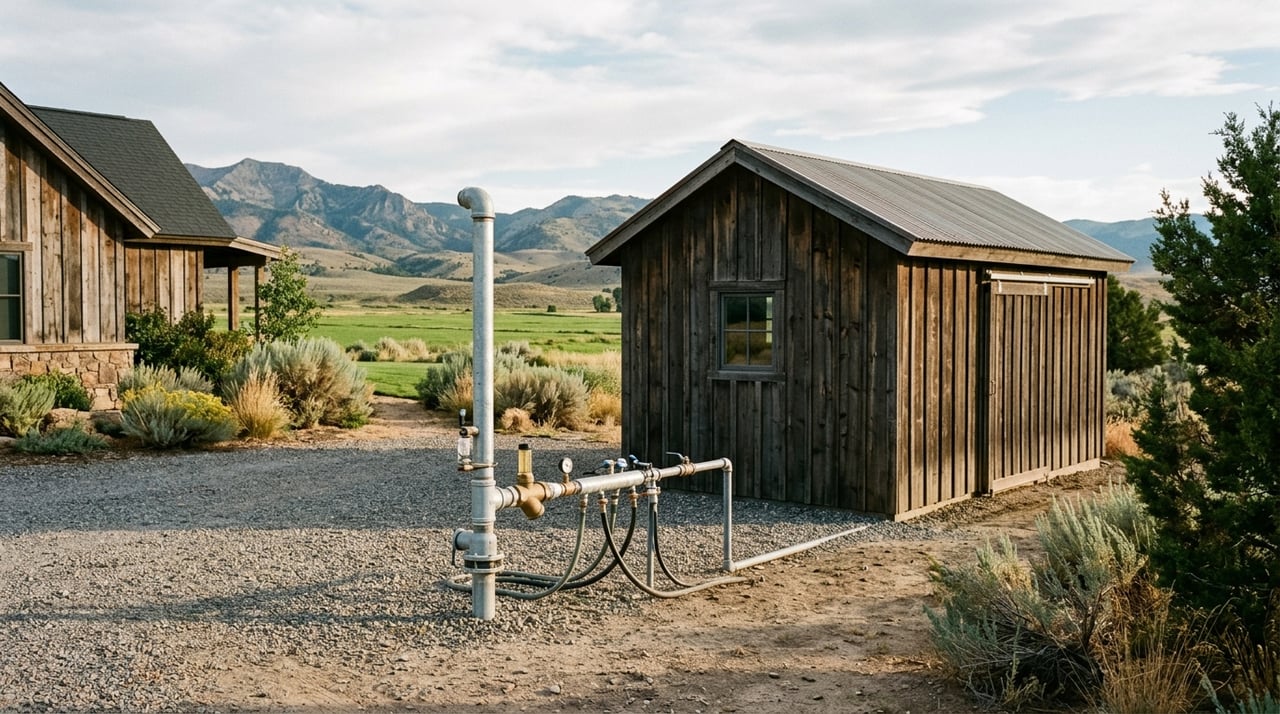
In many Bonanza-area property searches, water is the make-or-break factor. A property can look perfect on paper, but if the water situation does not support your goals, the deal may not work the way you hoped.
Oregon uses a prior appropriation system for water. That means older water rights get served first when supply is short. Water rights also determine how much irrigation water a parcel may legally use, and those rights transfer with the property.
This is especially important if you are thinking about hay, pasture, or a commercial crop. Oregon State University notes that domestic wells may not be used to irrigate a commercial crop. So if farming is part of your plan, you need to understand exactly what legal water access comes with the property.
District Water Is Its Own System
In the Bonanza area, irrigation may come through Langell Valley Irrigation District rather than only through a private well. The district is based in Bonanza, and its rules say water assessments are due annually whether or not water is used or available.
The district’s normal irrigation season runs from May 1 through September 30. Water is delivered on a call system, and shortages can lead to limits on delivery. The district also states that its water is for irrigation only, and much of the system relies on open ditches that may be subject to shortages, fluctuation, and interruption.
If a property is served by district water, ask these questions early:
- Does the parcel have a district allotment?
- Can that allotment transfer at closing?
- Are there unpaid assessments tied to the land?
- Has non-use created any issues?
- What annual costs come with the water service?
Private Wells Need Careful Review
If the property uses a private well for domestic water, due diligence matters here too. Oregon requires that when real estate includes a private domestic well, the seller must test for arsenic, nitrates, and total coliform bacteria and provide the results to the buyer within 90 days of receiving them. Those results are valid for one year.
Well logs are also useful because they can show geologic formations, design, construction, and yield. Oregon State University notes that private well owners are responsible for the safety of their drinking water, and water quality issues such as salt, pH, bacteria, or specific minerals can affect both domestic and irrigation use.
A well can exist and still raise questions. You want to know how it performs, what the records show, and whether water quality fits your intended use.
Septic Is Not a Small Detail
On rural property, septic is a central part of the buying decision. In Klamath County, the Septic/Onsite Division oversees onsite systems, and new systems begin with a site evaluation.
That evaluation looks at factors such as soil profile test pits, parcel size, slope, and nearby water bodies and wells. The county also says all plumbing fixtures that generate wastewater must connect to an approved septic system.
This can surprise buyers who are planning a more independent or off-grid setup. The county states that Oregon still requires septic even for off-grid concepts that may include composting or incinerating toilets. If a parcel does not already have an approved system, make sure you understand what the property can support before you buy.
Soil, Use, and Farm Fit Matter
A small farm is not just about acreage. It is about whether the land is a good fit for what you want to do.
Before committing to a crop or livestock plan, check the soils. The Natural Resources Conservation Service says Web Soil Survey provides public soils data, and Klamath County has certified soil survey coverage. Soil type, drainage, and suitability can all affect how practical your plans really are.
This is one reason buyers are encouraged to think of the purchase as a business decision, not only a lifestyle decision. The Oregon Department of Agriculture recommends a business plan and notes that grants are rarely available for would-be farmers. Going in with clear goals and realistic expectations can help you choose the right property.
Build Your Advisor Team Early
You do not have to figure all of this out on your own. In fact, one of the smartest moves you can make is building the right support team before you write an offer.
Based on local guidance, useful early contacts can include:
- Klamath County Planning
- Klamath County Septic/Onsite Division
- The Oregon Water Resources Department watermaster
- Langell Valley Irrigation District
- A licensed well contractor
- The local OSU Extension office in Klamath Falls
OSU’s Small Farms Program also offers research-based resources, educational programming, technical assistance, consultations, and peer connections for small and mid-scale farmers, ranchers, and rural land stewards. If you are still shaping your plans, those kinds of resources can be especially helpful.
Wildfire Readiness Belongs on Your Checklist
When you are buying rural property in Klamath County, wildfire readiness should be part of the conversation. County emergency resources note that evacuation route options can be limited and facilities for people and large animals may be few.
For a small-farm buyer, this adds another layer to property selection. Access, defensible space, and livestock evacuation planning are worth thinking through before closing, not after. A property may look beautiful, but practical emergency planning still matters.
Questions To Ask Before You Make an Offer
If you are serious about a small farm in Bonanza, keep this checklist handy. These are some of the most important questions to answer before moving forward:
- What is the zoning?
- Is a dwelling allowed on this parcel?
- Can accessory structures like a shop or barn be built?
- Does the property include water rights or irrigation district water?
- Are there annual water assessments or maintenance obligations?
- Can the water rights or district allotment transfer at closing?
- What does the well log show?
- Is the well water test current?
- Is there an approved septic system, or can one be installed for the intended use?
- Are the soils and drainage suitable for the crops or animals you want?
- Does the property layout support wildfire access and emergency planning?
When you ask these questions early, you can compare properties more clearly and avoid costly surprises. That kind of clarity matters whether you are buying your first acreage property or making a move into a more land-focused lifestyle.
A small farm purchase in Bonanza can be a great opportunity, but the best outcomes usually start with careful homework. If you want a local guide who can help you evaluate land, ask better questions, and navigate the process with confidence, Sarena Sutton is here to help.
FAQs
What should you check first when buying a small farm in Bonanza?
- Start with zoning, dwelling eligibility, water access, septic status, and whether the land fits your intended use.
How important are water rights for Bonanza farm property?
- Water rights are very important because they determine how much irrigation water a parcel may legally use, and older rights generally get served first when supplies are short.
Can you build a shop or barn before a house in Klamath County?
- Klamath County says a primary dwelling generally must come before accessory structures, though a shop may sometimes be allowed before the house if the dwelling permit is already in place.
Do Bonanza-area rural properties always need septic approval?
- Yes, wastewater-producing plumbing fixtures must connect to an approved septic system, and the county says Oregon still requires septic for off-grid setups.
What water testing is required for a private well in Oregon real estate?
- If the property has a private domestic well, the seller must test for arsenic, nitrates, and total coliform bacteria and provide the results to the buyer within 90 days of receiving them.
Who can help you evaluate a small farm property near Bonanza?
- Helpful contacts can include county planning, the county septic division, the OWRD watermaster, the irrigation district, a licensed well contractor, and OSU Extension.